Wharf Street, Portland, Maine
The workshop
Holloway & Wren is Nell Holloway and Sam Wren, two benches and a showroom in a converted ship chandlery in the Old Port. We started in a garage in 2014 and moved downtown in 2019.
Tanned with bark, not chrome
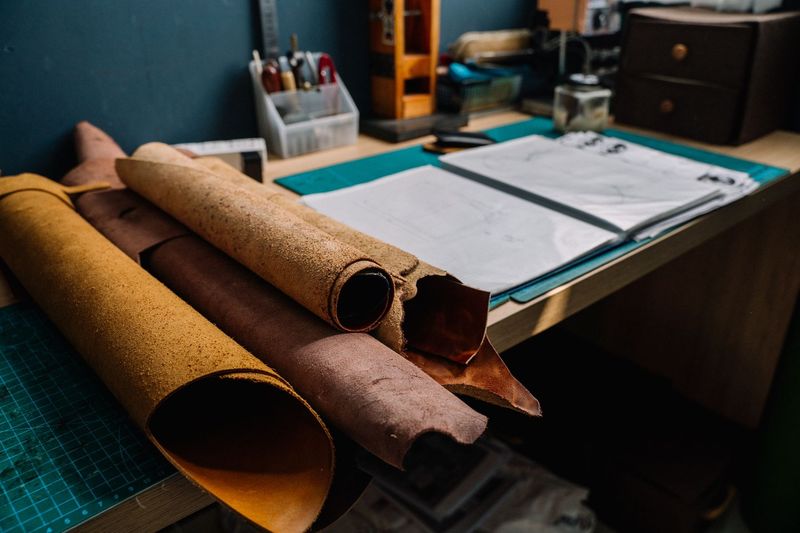
All our leather is vegetable tanned at a family run tannery in Tuscany that has used chestnut and mimosa bark for four generations. The hides sit in the pits for around forty days. Chrome tanning takes one.
The slow way gives a firm, clean cut leather that takes an edge and ages in public. It darkens where your hand holds it, softens where it folds, and picks up a shine nobody can fake. We buy whole sides, shoulders and bends, so we can choose where each piece is cut from.
Two needles, one thread
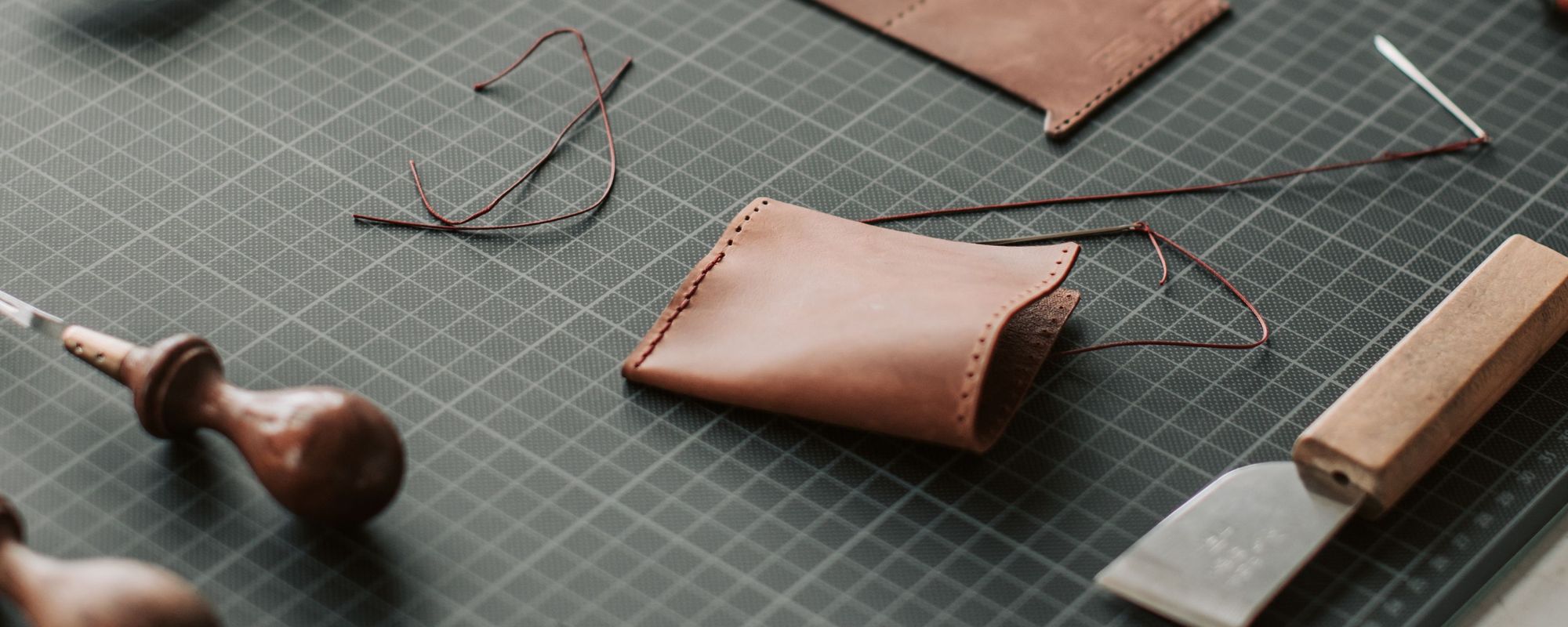
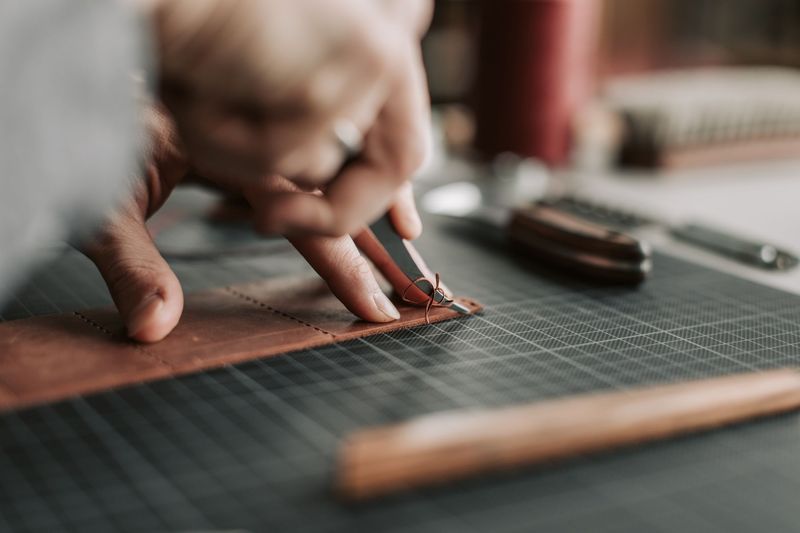
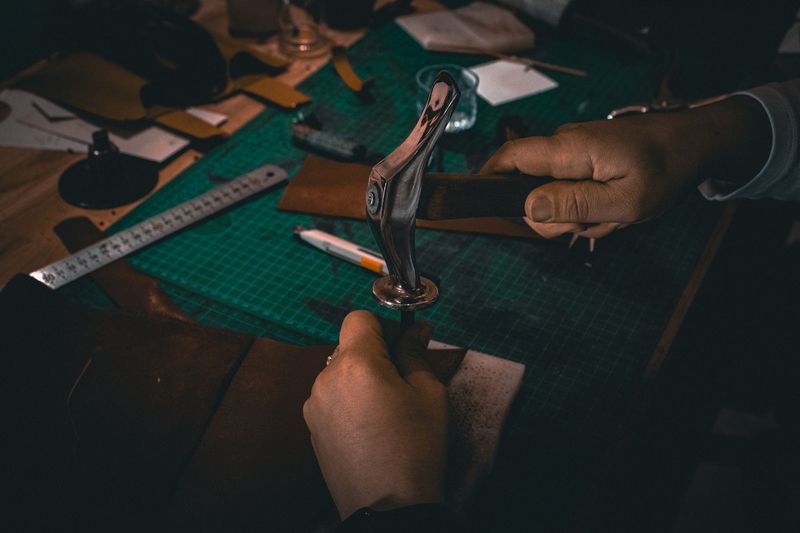
Every seam is saddle stitched by hand. One length of waxed linen runs through each hole twice, from both sides, with a needle on each end. A machine lockstitch unravels when one stitch breaks. A saddle stitch does not.
We stitch small goods at eight stitches to the inch with 0.55 mm thread, and bags at six to the inch with 0.8 mm thread so the seams carry weight. A bifold has about 260 stitches. The Commercial Street Satchel has a little over 2,000.
Less care than you think
Vegetable tanned leather wants to be used. Most of the care is in the carrying.
- Rain. Pat it dry with a cloth and let it dry at room temperature. Never on a radiator or in front of a heater.
- Scratches. Rub light marks with a warm thumb. The oils in the leather close most of them in a minute.
- Conditioning. Twice a year, a pea sized amount of beeswax balm worked in with your fingers. More is worse.
- Storage. Keep bags stuffed with paper and out of plastic so the leather can breathe.
Repaired for life, by the people who made it
If a stitch lets go, an edge frays or a snap wears out, send the piece back to the workshop. We restitch, re-edge and replace hardware at no charge for as long as we are at the bench. You pay postage one way; we pay it back.
For wear that goes past a repair, like a strap worn through after fifteen years, we quote a rebuild at the cost of the leather alone. Email a photo to repairs@hollowayandwren.example and we will reply within two working days.
The showroom
The showroom sits at the front of the workshop, so on most days you can watch a piece being stitched while you look. Bring an old piece in and we will look it over while you wait.
| Monday to Wednesday | By appointment |
|---|---|
| Thursday to Saturday | 10am to 5pm |
| Sunday | 11am to 4pm |
Wharf Street, Portland, Maine. Two minutes from the Casco Bay ferry terminal. Street parking, or the garage on Fore Street.
Carry less, keep it longer.
Shop the range